
MySQL is one of the most widely used relational database management systems (RDBMS) in the world, powering everything from small websites to large-scale enterprise applications. If you’ve ever wondered what is MySQL and how does it work, this guide breaks it down in simple, practical terms.
What Is MySQL?
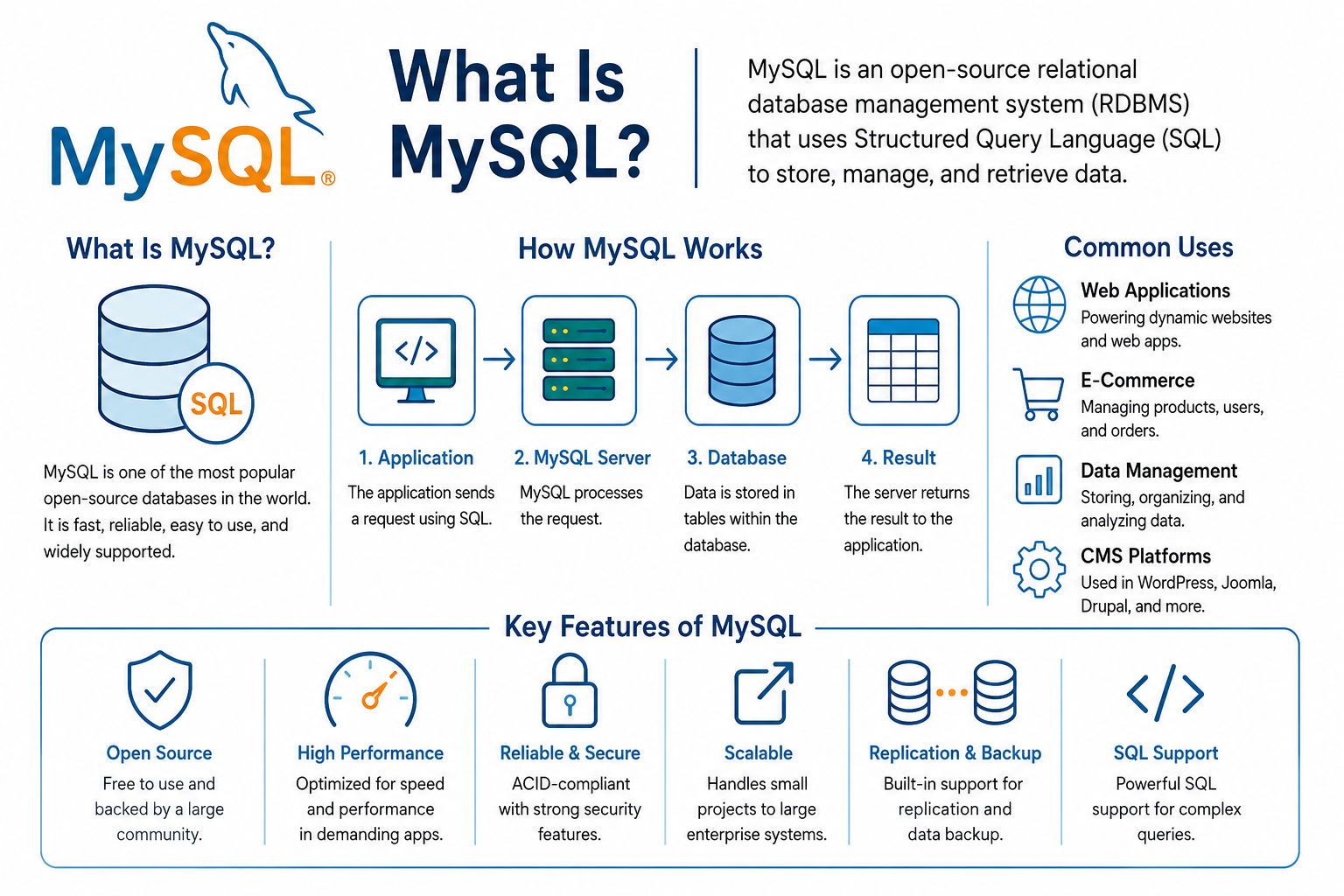
MySQL is an open-source relational database management system that stores data in structured tables made up of rows and columns. Instead of keeping information in one large file, MySQL organizes data into separate tables that can be linked together through relationships, making it easy to store, retrieve, and manage large volumes of information efficiently.
Because it’s open-source, MySQL is free to use, highly customizable, and backed by a large global community of developers. It’s commonly used alongside PHP and other server-side languages, which is why it’s a core part of many content management systems, e-commerce platforms, and custom web applications.
What Does MySQL Actually Store?
MySQL stores structured data — text, numbers, dates, and other defined data types — inside tables. This can include anything from user accounts and product listings to blog posts, orders, and transaction logs. Each piece of data is placed in a specific column with a defined data type, which keeps information consistent and makes it easy to search, filter, and update later.
SQL vs MySQL: What’s the Difference?
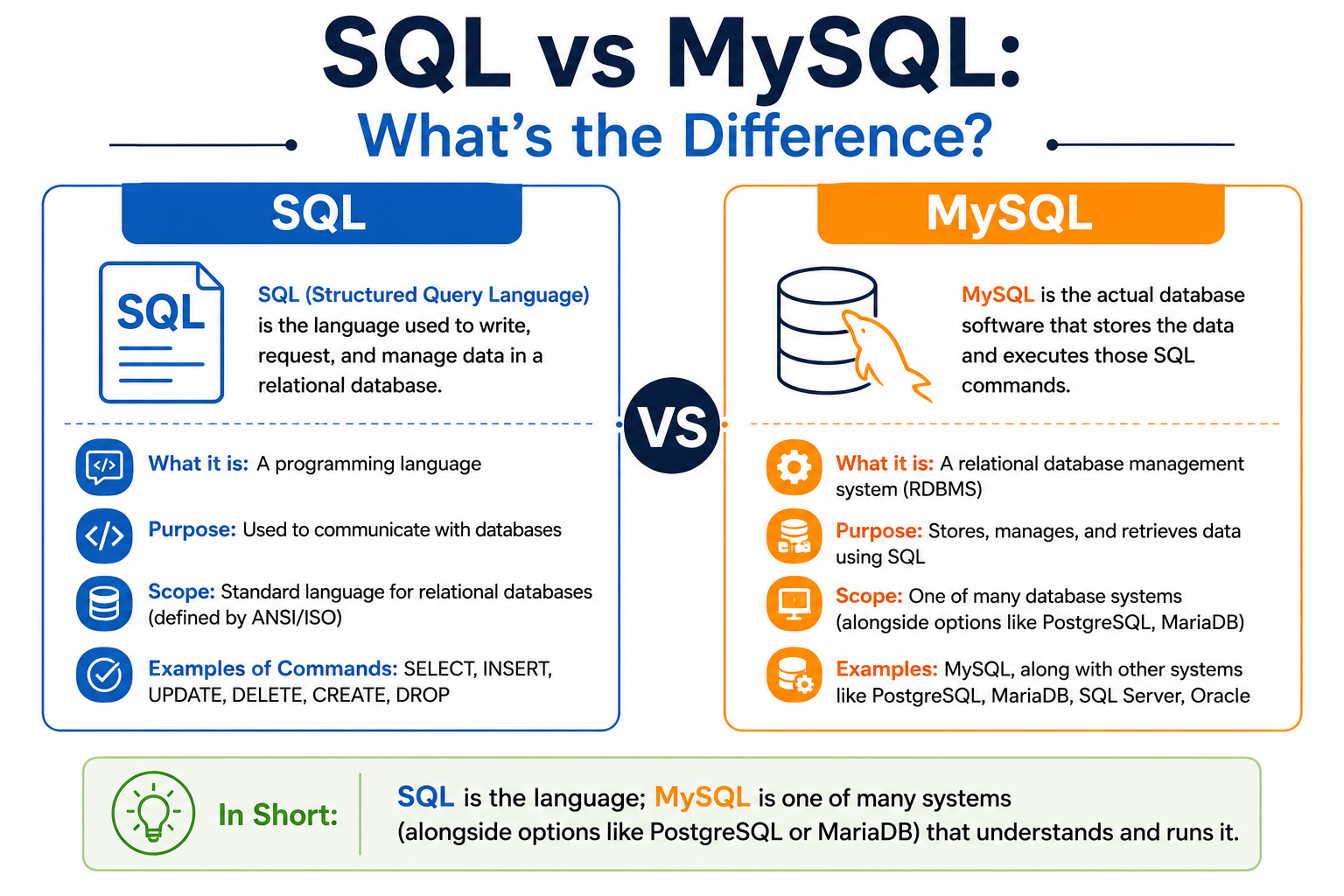
This is a common point of confusion. SQL (Structured Query Language) is the language used to write, request, and manage data in a relational database. MySQL, on the other hand, is the actual database software that stores the data and executes those SQL commands. In short, SQL is the language; MySQL is one of many systems (alongside options like PostgreSQL or MariaDB) that understands and runs it.
Why MySQL Is So Widely Used
A few qualities explain MySQL’s popularity among developers and businesses:
- Reliability – MySQL has been battle-tested across millions of production environments.
- Speed – It’s optimized for fast read and write operations, especially for web applications.
- Scalability – It can handle small projects as easily as high-traffic applications.
- Compatibility – It works well with most programming languages and operating systems.
- Community support – Extensive documentation and an active developer community make troubleshooting easier.
How MySQL Works: The Core Process
At its core, MySQL follows a client-server model. Understanding this structure makes it much clearer how data moves through the system.
1. The Client Sends a Request
A client — this could be a web application, a script, or a database management tool — sends a request to the MySQL server. This request is written in SQL (Structured Query Language), the standard language used to communicate with relational databases.
2. The MySQL Server Processes the Query
Once the MySQL server receives the SQL query, the query optimizer determines the most efficient execution plan before any data is retrieved. This process happens in a few internal steps:
- Parsing – The server checks the query for correct syntax.
- Optimization – The query optimizer evaluates the available indexes and decides the fastest path to the requested data.
- Execution – The query runs against the appropriate storage engine using that execution plan.
3. The Storage Engine Handles the Data
MySQL uses storage engines to manage how data is actually stored and retrieved on disk. The most common engine, InnoDB, supports features like transactions and row-level locking, which help maintain data accuracy even when multiple users access the database at the same time.
4. The Result Is Returned
After processing, MySQL sends the requested data — or a confirmation of an action like an insert or update — back to the client. This entire cycle typically happens in milliseconds, even for complex queries.
Tables, Rows, and Relationships
MySQL databases are built around tables, each representing a specific type of data (for example, “customers” or “orders”). Each table contains:
- Rows – Individual records of data.
- Columns – Defined fields that describe the type of data being stored (like name, email, or date).
Tables can be connected using keys, allowing related data to be linked without duplication. For example, a “customers” table can be linked to an “orders” table using a customer ID, keeping the database organized and reducing redundancy.
Performance and Security at a Glance
A few additional factors shape how well a MySQL database runs day to day:
- Indexes speed up data retrieval by giving the query optimizer a faster path to specific rows, rather than scanning an entire table.
- Caching can reduce repeated work by storing frequently requested results closer to the application layer.
- Security is handled through user privileges, encrypted connections, and controlled access to specific databases and tables.
Each of these areas involves enough detail to warrant its own dedicated guide — this section is simply meant to show how they connect to the core MySQL process described above.
Common Use Cases for MySQL
MySQL is used across a wide range of applications, including:
- Content management systems (like WordPress)
- E-commerce platforms
- Web and mobile applications
- Data analytics and reporting tools
- Enterprise-level business applications
Its flexibility allows it to serve as the backend database for both simple websites and complex, high-traffic platforms.
Final Thoughts
MySQL remains a foundational technology for modern websites and applications because it combines reliability, speed, and flexibility in an open-source package. By organizing data into structured tables and processing SQL queries through a clear client-server workflow, MySQL makes it possible to manage large amounts of information quickly and accurately. Understanding this process is a helpful first step for anyone working with databases, whether you’re building a website, managing an application, or simply exploring how modern data systems function.
