
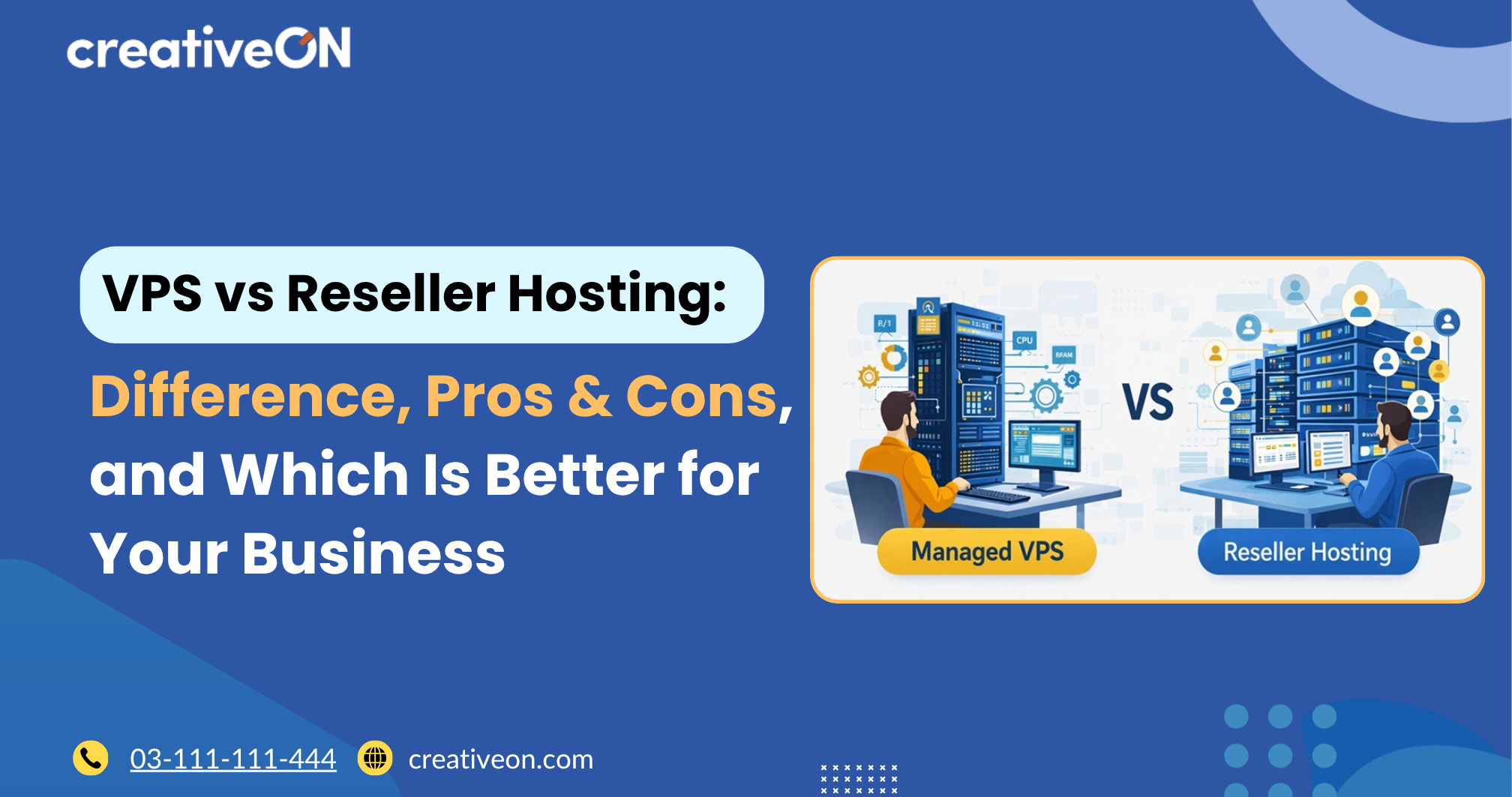
Choosing the right web hosting can feel overwhelming—especially when you come across options like VPS and Reseller hosting. Both sound powerful, both are widely used, but they serve completely different purposes.
If you pick the wrong one, you could face slow performance, limited growth, or unnecessary costs.
The good news? Once you understand the difference in simple terms, the decision becomes much easier. In this guide, we’ll break down VPS vs Reseller Hosting in a way that’s easy to understand—even if you’re completely new to website hosting.
What is VPS vs Reseller Hosting?
Let’s start with a simple explanation.
VPS (Virtual Private Server) hosting is a type of web hosting where a physical server is divided into multiple virtual servers. Each user gets dedicated resources like CPU, RAM, and storage—giving better performance and control.
Reseller hosting, on the other hand, allows you to purchase hosting resources from a web hosting provider and sell them to your own clients under your own brand.
👉 Think of it like this:
- VPS Hosting = You control your own private server
- Reseller Hosting = You run your own hosting business
Both are part of professional web hosting services, but they are designed for different goals.
How Does It Work?
Understanding how each works helps you avoid confusion later.
VPS Hosting – How It Works
- A powerful physical server is divided using virtualization technology
- Each VPS gets isolated resources (RAM, CPU, storage)
- You get root access (full control over server settings)
- You can install applications, configure environments, and scale resources
👉 It’s like owning a private apartment where everything is under your control.
Reseller Hosting – How It Works
- You buy hosting resources from a web hosting provider
- You create multiple client accounts using tools like WHM/cPanel
- You sell hosting packages under your own brand (white-label hosting)
- You manage storage, bandwidth, and client access
👉 It’s like renting a building and subletting rooms to your own customers.
Why It Matters for Businesses
The type of web hosting services you choose directly impacts your business performance, security, and growth.
For example, the best web hosting for small business should offer:
- Fast loading speeds
- Reliable uptime
- Strong security
- Scalability
VPS Hosting Benefits
- High performance with dedicated resources
- Better security through isolated environments
- Full control (root access)
- Ideal for developers, SaaS, and growing businesses
- Supports fast web hosting services for high traffic
Reseller Hosting Benefits
- Start your own hosting business
- Generate recurring monthly income
- No need to manage physical servers
- Beginner-friendly setup
- Ideal for freelancers and agencies
Types of Web Hosting
To understand where VPS and Reseller hosting fit, here’s a quick overview of common web hosting types:
Shared Hosting
- Multiple websites share one server
- Most affordable option
- Best for beginners
VPS Hosting
- Dedicated resources in a virtual environment
- More control and performance
- Ideal for scaling websites
Cloud Hosting
- Uses multiple servers for high reliability
- Highly scalable
- Great for modern applications
Dedicated Server Hosting
- Entire server dedicated to one user
- Maximum performance and control
- Best for large businesses
👉 VPS and Reseller hosting sit between shared and dedicated hosting—offering a balance of performance and flexibility.
VPS vs Reseller Hosting: Key Differences
Let’s simplify everything with a direct comparison.
Purpose
- VPS: Run your own applications or websites
- Reseller: Sell hosting services to clients
Control
- VPS: Full root access
- Reseller: Limited server control, focus on client management
Technical Skills
- VPS: Requires moderate technical knowledge
- Reseller: Beginner-friendly
Performance
- VPS: High and stable performance
- Reseller: Depends on parent server
Income Potential
- VPS: Not designed for resale
- Reseller: Built for recurring income
Which Is Better: VPS or Reseller Hosting?
This is the most important question.
Choose VPS Hosting if:
- You want full control over your server
- You run a high-traffic website or application
- You need custom configurations
- You want secure web hosting with isolated resources
👉 Best for developers, startups, SaaS platforms, and growing businesses.
Choose Reseller Hosting if:
- You want to start a hosting business
- You manage websites for clients
- You want to earn recurring revenue
- You prefer simple, low-maintenance solutions
👉 Best for freelancers, agencies, and entrepreneurs.
VPS vs Reseller Hosting Pricing
Pricing plays a big role when choosing affordable web hosting.
- Reseller hosting is usually more affordable at the start
- VPS hosting costs more because it includes dedicated resources
- Pricing depends on RAM, CPU, storage, and support level
👉 In general:
- Reseller = lower cost + income potential
- VPS = higher cost + performance and control
If you’re looking for best cheap web hosting, reseller plans may be a good entry point.
If you need power and flexibility, VPS is worth the investment.
How to Choose the Right Web Hosting
Choosing the right web hosting provider depends on your goals.
Consider:
Your Purpose
- Website performance → VPS
- Business opportunity → Reseller
Your Budget
- Limited budget → Reseller
- Growth-focused investment → VPS
Technical Skills
- Beginner → Reseller hosting
- Intermediate/advanced → VPS hosting
Scalability Needs
- Future growth → VPS or Cloud hosting
👉 The right decision depends on whether you want to run a website or run a hosting business.
Real-Life Example
Let’s make this practical.
Example 1: eCommerce Business
Ahmed runs an online store that’s growing fast. His shared hosting can’t handle traffic.
👉 He upgrades to VPS hosting
Result: Faster website, better uptime, more sales.
Example 2: Web Design Agency
Ayesha builds websites for clients.
👉 She uses Reseller hosting
Result: She sells hosting to clients and earns monthly recurring income.
Common Misconceptions
Let’s clear some common confusion.
“VPS and Reseller Hosting are the same”
❌ No
✔ VPS is for using server resources
✔ Reseller is for selling hosting
“Cheap hosting is always bad”
❌ Not true
✔ Many affordable web hosting options are reliable
“Unlimited hosting exists”
❌ Misleading
✔ All hosting has limits (CPU, RAM, bandwidth)
“Hosting and domain are the same”
❌ Different
✔ Hosting = where your website lives
✔ Domain = your website name
Related Concepts
To fully understand web hosting, you should also know:
- Domain registration (your website name)
- DNS (connects domain to server)
- Cloud infrastructure (scalable hosting)
- Email hosting (business communication)
- Google Workspace solutions (professional email & collaboration)
These components work together to build a complete online presence.
Frequently Asked Questions
