
Published: September 21, 2026
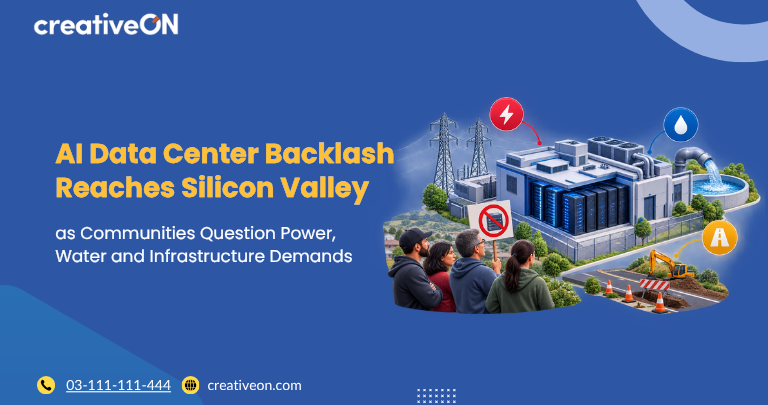
The rapid growth of artificial intelligence is driving a massive expansion of data-center infrastructure around the world. But in Silicon Valley, the heart of the technology industry, some communities are increasingly questioning how quickly new data centers should be built.
San Jose, California, has been actively working to attract data-center development as demand for AI computing continues to grow. However, residents and environmental groups are now raising concerns about electricity consumption, water use, pollution, and the potential impact of large facilities on surrounding communities.
The debate illustrates a broader challenge facing the data-center industry: how to expand the infrastructure needed for AI and cloud computing while managing its impact on local resources and communities.
Why Are Data Centers Expanding So Quickly?
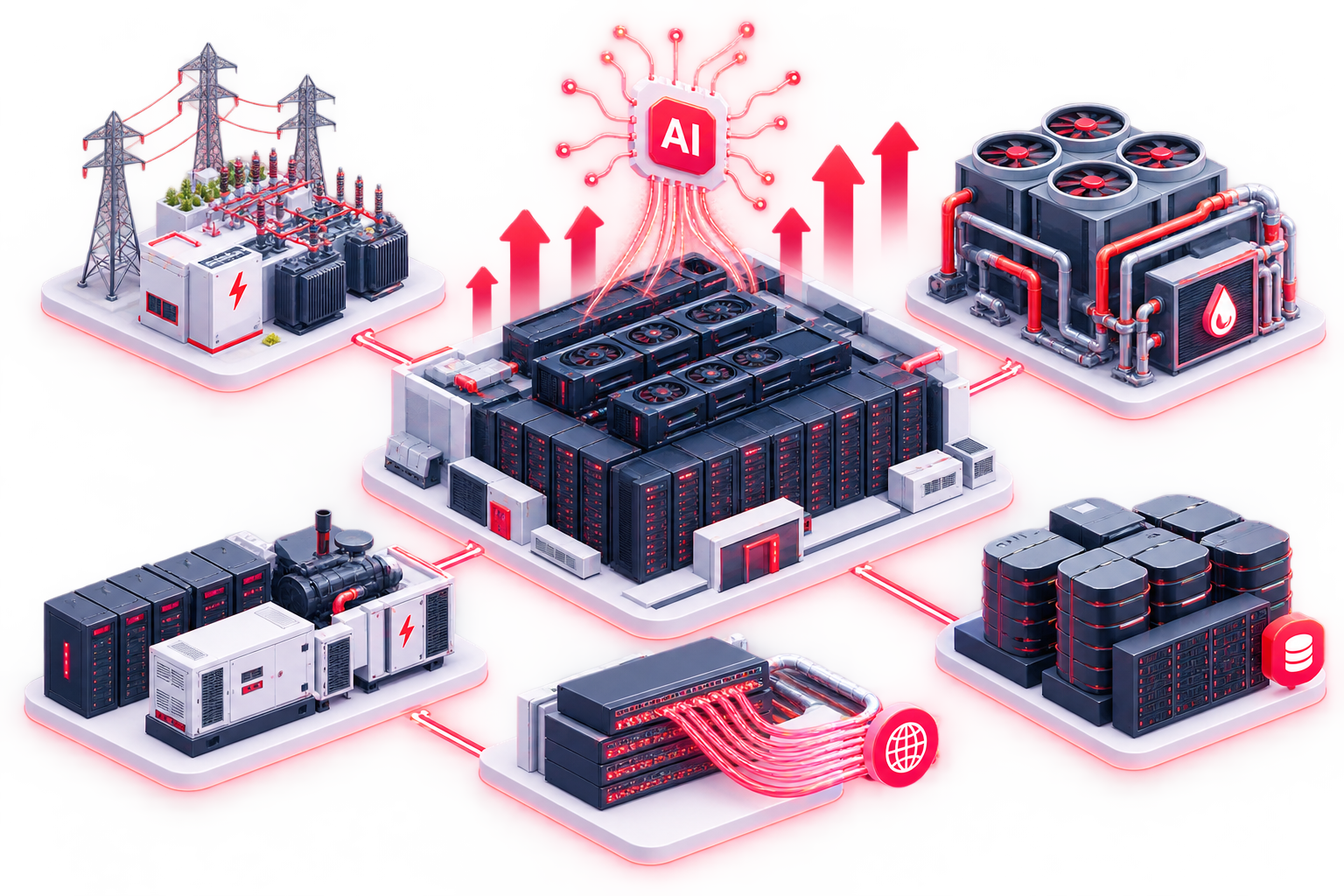
AI applications require significant computing power. Training and running advanced AI models can require large clusters of specialized processors, creating demand for increasingly powerful data centers.
The growth of AI is therefore creating demand for:
- High-density computing infrastructure
- Large amounts of electricity
- Advanced cooling systems
- High-speed network connectivity
- Additional power-grid capacity
- Reliable backup power
- Large-scale data storage
This is adding a new layer to the traditional data-center market.
Data centers have long supported websites, applications, cloud services, financial systems, streaming platforms, and enterprise software. AI is now increasing the scale of computing infrastructure required by many of these services.
As a result, companies and governments are looking for locations where large amounts of power and other infrastructure can be made available.
Why Is San Jose Facing Opposition?
San Jose has promoted itself as a location for data-center development. The city previously reached an agreement with utility PG&E intended to help speed up power delivery for large electricity users, including data centers.
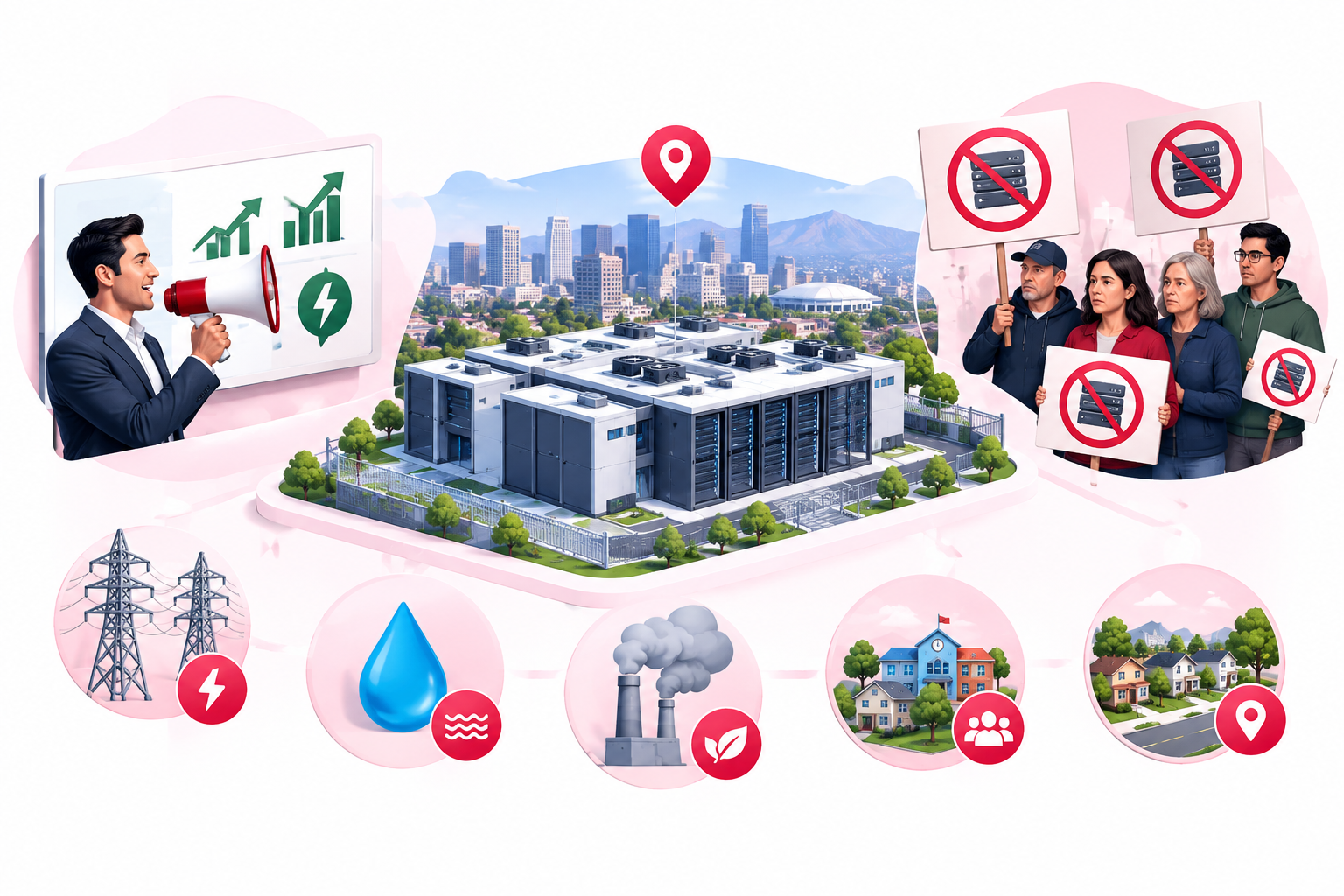
However, the expansion has generated opposition from some residents and environmental groups. According to Reuters, community concerns include the potential effect of data centers on electricity costs, water resources, pollution and quality of life.
Some proposed projects have also raised concerns because of their proximity to residential areas, parks and schools.
The issue is particularly significant because San Jose is located in Silicon Valley, an area already closely associated with major technology companies and a substantial existing technology infrastructure.
Electricity Is Becoming a Major Data Center Issue
One of the biggest challenges is electricity.
Modern data centers can consume substantial amounts of power, particularly facilities designed for AI workloads. As operators build larger computing clusters, utilities must consider whether existing electricity-generation and transmission infrastructure can support the additional demand.
This creates several questions for communities:
- How much additional electricity will a new data center require?
- Who will pay for grid upgrades?
- Could increased demand affect electricity prices?
- How quickly can utilities provide additional capacity?
- What happens when several large data centers are built in the same area?
These questions are becoming increasingly important as AI infrastructure expands.
In San Jose, city officials have argued that additional data-center development could generate millions of dollars in tax revenue for public services. PG&E has also said that large new customers could help distribute some of the cost of infrastructure required to serve them.
At the same time, residents and community groups are questioning whether the economic benefits will adequately compensate for the infrastructure and environmental concerns.
Water and Cooling Are Also Part of the Conversation
Electricity is not the only resource required by a data center.
Servers generate substantial heat and need reliable cooling systems to operate safely. Depending on the facility’s design, cooling can involve significant water consumption.
This makes water availability an important consideration when planning large data centers, particularly in areas where water resources are already under pressure.
Community groups in San Jose have raised questions about whether rapid data-center development could place additional pressure on local water infrastructure.
The issue is helping push the industry toward greater attention to data-center efficiency, cooling technology and water management.
Backup Generators Raise Pollution Concerns
Data centers also require backup power.
Facilities supporting critical applications generally cannot simply shut down when the electricity grid experiences an outage. Backup generators are therefore commonly used to maintain operations during emergencies or other power disruptions.
Diesel generators have become part of the environmental debate surrounding some data-center projects.
Environmental groups have questioned how frequently backup generators are operated and have called for greater transparency. The Data Center Coalition, according to Reuters, says such generators are intended for emergencies and are important for maintaining critical services.
This highlights another challenge for the industry: data centers must provide extremely high reliability while also addressing environmental concerns associated with backup power.
Data Center Development Is No Longer Just a Technology Issue
The Silicon Valley debate shows that data centers are increasingly becoming an infrastructure issue rather than simply a technology issue.
Building a modern data center can involve:
Power + Land + Water + Cooling + Connectivity + Construction + Environmental Planning
Each component can affect the surrounding community.
This is especially important for AI infrastructure because AI workloads can require much greater computing capacity than many traditional applications.
As a result, future data-center projects may face greater scrutiny over their expected resource consumption before construction begins.
California Is Considering New Data Center Rules
The discussion in California is also moving toward regulation.
According to Reuters, the state’s legislature has approved legislation addressing issues including data-center grid costs and greater transparency around resource use. The measures were awaiting action from Governor Gavin Newsom as of the Reuters report.
Separately, San Francisco officials have proposed a temporary pause on approvals for new data centers while potential risks and planning requirements are examined.
These developments demonstrate that data-center planning is becoming a more closely regulated area in some markets.
Silicon Valley Is Not the Only Market Seeing Pushback
The discussion in California is part of a broader trend.
Communities in several parts of the United States have raised concerns about large data-center projects, particularly around electricity demand, water consumption, land use and environmental effects.
Recent reporting has also highlighted opposition to proposed projects in other states, showing that the debate is not limited to Silicon Valley.
For data-center operators, this means that access to inexpensive land and electricity may no longer be the only factors determining where a facility can be built.
Community acceptance, infrastructure capacity and regulatory requirements can increasingly influence project timelines and costs.
What Does This Mean for the Future of Data Centers?
The current debate does not necessarily mean that data-center development will stop.
Demand for cloud computing, AI, online services, enterprise applications and digital infrastructure continues to create a need for additional computing capacity.
Instead, the discussion is increasingly focused on how that infrastructure should be developed.
Future data centers are likely to receive greater attention in areas such as:
- Energy efficiency
- Renewable and low-carbon power
- Water-efficient cooling
- Grid infrastructure
- Backup power technology
- Local economic benefits
- Environmental reporting
- Community engagement
- Data-center location and land use
For the industry, this could encourage investment in more efficient infrastructure and new approaches to cooling and power management.
Why This Matters for Businesses
The debate may seem focused on large AI companies, but its implications extend to businesses that rely on data centers every day.
Websites, e-commerce platforms, SaaS applications, financial systems, cloud services and enterprise software all depend on data-center infrastructure.
For businesses choosing hosting or cloud infrastructure, factors such as data-center location, network connectivity, infrastructure reliability, security and scalability remain important.
A data center is much more than a building filled with servers. It is part of a larger infrastructure ecosystem involving electricity, cooling, telecommunications, physical security and network connectivity.
As computing demand grows, the quality and efficiency of that infrastructure will become increasingly important.
The Bigger Picture: AI Needs Infrastructure
The AI boom is often discussed in terms of models, GPUs and software. But behind every AI service is physical infrastructure.
That infrastructure requires buildings, servers, networks, cooling systems and power.
The developments in Silicon Valley show that the physical side of the AI revolution is receiving more public attention.
For data-center operators and technology companies, the challenge will be to continue expanding computing capacity while demonstrating that new infrastructure can operate efficiently and responsibly within the communities where it is built.
The future of AI therefore depends not only on better software and faster processors, but also on reliable, scalable and increasingly efficient data-center infrastructure.
Frequently Asked Questions
